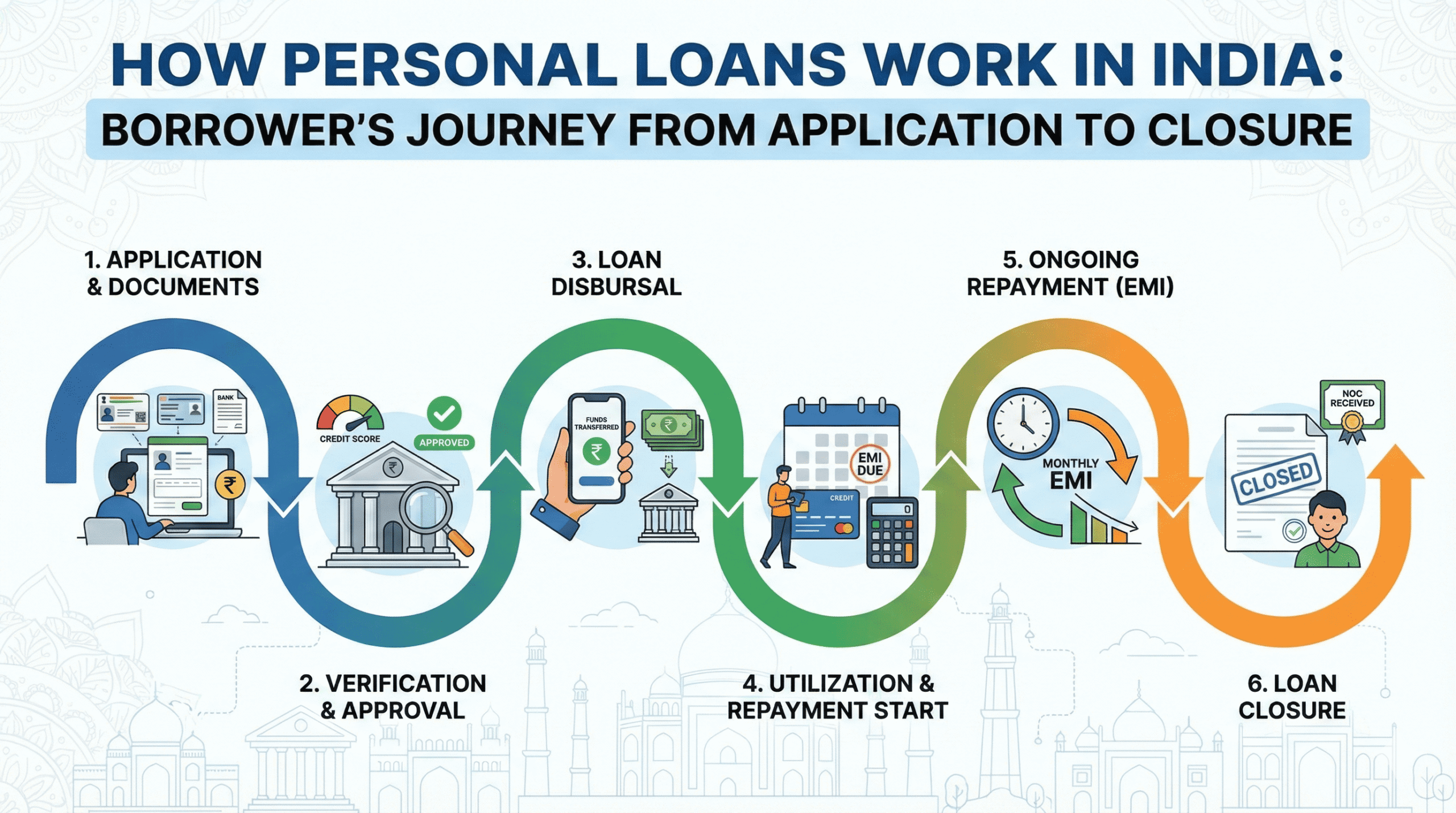
Understanding the complete personal loan journey from application to closure empowers borrowers to navigate the process efficiently, avoid common pitfalls, and secure optimal terms. While digital lending platforms have compressed timelines—some promising approval in minutes—the fundamental stages remain consistent across traditional banks and fintech lenders. Each stage involves specific checks, documentation requirements, and decision points where preparation and awareness significantly influence outcomes.
The journey begins with self-assessment, though many borrowers skip this critical step. Before approaching lenders, evaluate your actual need, repayment capacity, and creditworthiness. Calculate the exact amount needed rather than borrowing the maximum available—each additional rupee costs interest over the tenure. Assess monthly cash flow honestly, accounting for existing EMIs, essential expenses, insurance premiums, and emergency buffers. Financial advisors recommend keeping total EMI obligations below 50% of net monthly income, ideally closer to 40%. Check your credit score through free platforms or bureau services—knowing your score before applying allows you to gauge eligibility and potentially improve it before formal applications.
The research and comparison phase separates informed borrowers from those with suboptimal deals. Personal loan offerings vary dramatically—interest rates can differ by 5-8 percentage points between lenders for identical borrower profiles, translating to lakhs in interest costs. Public sector banks like SBI typically offer lower rates (starting around 10.50%) but have stringent eligibility and slower processing. Private banks such as HDFC and ICICI balance competitive rates (11-16%) with faster processing. NBFCs like Bajaj Finance may accept profiles banks reject but charge higher interest (13-20%). Fintech lenders offer instant digital processes but sometimes have effective rates exceeding 20%. Compare on multiple parameters: interest rate, processing fees, prepayment charges, tenure flexibility, disbursal timeline, and customer service reputation.
The eligibility check provides preliminary assessment without impacting credit score, as most lenders perform soft inquiries initially. You’ll provide basic information: age (typically 21-60 years), employment type, monthly income, city of residence, and existing EMI obligations. Lenders calculate maximum eligible amount using Fixed Obligation to Income Ratio (FOIR): Maximum EMI Allowed = (Net Monthly Income × FOIR Percentage) – Existing EMIs. FOIR typically ranges from 40-60% depending on income level. For example, if net monthly income is ₹60,000 and existing EMIs total ₹10,000, with 50% FOIR: Maximum EMI = (60,000 × 50%) – 10,000 = ₹20,000. This translates to maximum loan amount based on interest rate and tenure.
Formal application begins once you identify a suitable offer, triggering a hard inquiry on your credit report. Most lenders offer completely digital applications through websites or mobile apps. The application captures comprehensive details: personal information, employment details, financial information, residence details, and references. Accuracy is critical—discrepancies between application and documents trigger delays or rejection. You’ll upload supporting documents: identity proof (Aadhaar, PAN), address proof, income proof (salary slips for salaried; ITR for self-employed), bank statements (3-6 months), employment proof, and photographs. Complete, clear documentation significantly impacts processing speed.
The verification and underwriting stage involves deep assessment. Credit bureau checks provide complete history including existing accounts, repayment patterns, inquiries, and defaults. Employment verification happens through HR calls or third-party services. Bank statements are scrutinized for salary credits, average balance, and concerning patterns like overdrafts or cheque bounces. Video KYC now enables remote identity verification. Risk categorization determines not just approval but the interest rate offered—the same lender might offer 11.5% to low-risk borrowers and 18% to high-risk profiles.
Approval decisions typically arrive within 24-72 hours for digital lenders, up to 7 days for traditional banks. Approval comes with a sanction letter detailing all terms: sanctioned amount, interest rate, tenure, EMI amount, processing fees, prepayment terms, and penalty clauses. This legally binding document demands careful review—pay special attention to prepayment charges, late payment penalties, and hidden fees. This is your last opportunity to negotiate or walk away before commitment.
Upon acceptance, the disbursal stage begins. You’ll complete final formalities: signing the loan agreement, setting up auto-debit mandate (NACH), and paying processing fees. The loan amount transfers to your bank account within 24-48 hours. The amount credited might be less than sanctioned if fees are deducted upfront. The first EMI due date is typically 30 days after disbursal.
The repayment stage extends over the loan tenure. EMI deduction happens automatically through NACH on the specified date—ensure sufficient balance at least a day before to avoid mandate failure, which attracts penalties and damages credit scores. Track your loan through the lender’s app or portal. Consider part-prepayments with surplus funds to reduce outstanding principal and total interest payout.
Foreclosure or premature closure becomes relevant when you want to repay the entire outstanding before tenure completion. Check loan agreement terms—if foreclosure charges apply (typically 2-5% of outstanding principal), calculate whether interest saved exceeds the charge. Request a foreclosure statement showing exact payable amount including outstanding principal, accrued interest, and foreclosure charges.
After full repayment, request a Loan Closure Certificate or No Objection Certificate confirming no outstanding amount remains. This document proves debt clearance and is critical for future loan applications. Verify your credit report 45-60 days after closure to confirm the loan shows as ‘Closed’ with zero outstanding. If discrepancies appear, raise disputes with credit bureaus. Store the closure certificate safely for at least 7 years.
Leave a Reply